read time • 8 mins
The Case for Energy-Savvy Freight Shipping with Trains + Barges
The Case for Energy-Savvy Freight Shipping with Trains and Barges
The First Law of Thermodynamics: We Can Never, Ever Win
Energy is our planet’s lifeblood. And yet, even in today’s most technologically advanced civilizations, our stewardship of that precious resource leaves ample room for improvement. This blog post employs a stylized version of the fundamental laws of thermodynamics (sometimes also known as Ginsberg’s Laws’s) to explain how barge and rail freight conveyance, working in concert through the recently announced Telegraph<>Open Tug partnership, and/or independently, might represent shippers’ smartest play for freight conveyance in an increasingly energy-starved world.
Let’s start at the largest possible scale, our universe. Every year, approximately 3,850 zettajoules (or 1,021 joules) pass from the source of all planetary energy, our sun, down through the atmosphere and to our energy-hungry planet. We capture only a small percentage of that energy (an estimated 451 exajoules (1,018 joules) annually, or less than a thousandth of one percent)[1].
We capture that energy in a myriad of ways. We tilt our windmills and solar arrays up toward the sun. We deliberately interrupt our running water. We engineer controlled atomic catastrophes in order to sweep up the energetic mess left behind from the collisions (fusion and fission). We even dig up and burn old decomposed organic material (fossil fuels) to secure for ourselves even the littlest slivers of our known universe’s natural energy abundance.
The first rule of thermodynamics teaches us that there is no making more energy. Now and forevermore, the energy is just there. It surrounds us. For us humans, there is only the devising of smarter ways to capture, transform, and – crucially for this argument – utilize the limited quantities of energy that we can get our grubby little hands on.
The Second Law of Thermodynamics: We Must Always Lose
Sadly, almost all of the sun’s manna from heaven slips through our simple, clumsy, human fingers. Why? Well, in part because of the second law of thermodynamics, which teaches us that energy is always dissipating in transition. In other words, we are always losing, and we are destined to go on losing (energetically speaking, anyways) forever. When we are converting sunlight into something more practically useful like food, fuel, or kinetic action, all things always hemorrhage valuable energy in the transition.
This conundrum affects freight transportation directly. Consider that typical gasoline-fired engines transform only about 30% of the gasoline’s inherent potential energy into usable work (i.e. making the truck go). Diesel engines do a little better, achieving roughly 40% thermal efficiency. It is important to note that these ubiquitous technologies represent impressive improvements in efficiency compared to past technologies like steam engines (8% thermal efficiency), and even natural systems like photosynthesis (4.5% – get over yourselves, plants). But nevertheless, even in the modern world, we are only ever ever engineering marginally smarter traps for catching and transforming sunlight into work. See Figure 1.

Figure 1: Typical thermal efficiency of different engine types
The Third Law of Thermodynamics: And, Realistically, You Can Never Stop Playing this Losing Game
The fundamental laws of thermodynamics do allow for conditions whereupon we could break even, energetically speaking. But, those conditions (basically very extreme cold) are so cold as to be only theoretical. This means that, in practical translation, we can only ever daydream of playing the thermodynamic game to a draw. Of course, in such circumstances, the wiser course of action is to devise smarter ways to lose.
For freight conveyance, this puts the physical and energetic advantages of barges and trains in sharp-relief compared to their sometimes more popular competitor, long-haul trucking. To appreciate this, consider first the magic buoyancy of an object floating in water. One simple way to understand a barges’ energetic advantage compared to a truck’s is by imagining how easy it would be to guide your tipsy and agreeable best friend floating on an innertube through a public swimming pool in the summertime. She’s had a few and she is smiling. This is barge conveyance. Now, consider how difficult it would be, at the end of that visit to the pool, to drag that same now inebriated best friend by her ankles across the hot asphalt parking lot and to your car. Energetically speaking, this is long-haul trucking.
Similarly, to understand trains’ energetic advantage compared to trucks, think about bicycle tires. Think of the tires on Tour de France racing bicycles, which are made as thin as practically possible in order to minimize the point of contact between the rubber and the road. That smaller friction point reduces drag and helps the road-racing touring bikes go faster than other bikes. The point of contact between a railcar’s steel wheel and the track is similarly small – typically only the size of a dime, compared to the smashed and squishy square foot of ground contact made by each of a big rig truck’s 18 rubber tires. All of this manifests itself in the energetic advantages of rail and barge transportation compared to trucks shown in Figure 2.
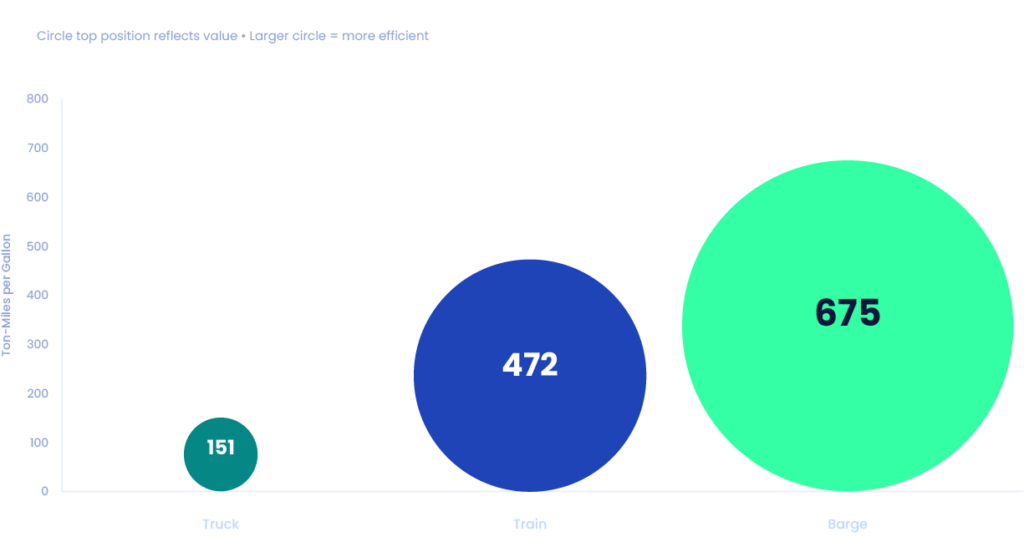
Figure 2: Ton-miles per gallon of diesel fuel
Figure 2 displays how far trucks, trains and barges can take one ton of freight on one gallon of diesel fuel. To clarify, let’s say it’s the most important stuff: one ton of grains to feed the people, or one ton of coal to feed the machines. On a gallon of fuel, a barge could take that cargo 675 miles, a train 472 miles, and a truck only 151 miles. Remember, all of these conveyances are working with similar engine technology (~40-50% efficient diesel engines), but barges and trains work much more cooperatively with the fundamental laws of physics and thermodynamics than do trucks.
If we’re doomed to lose energy in freight transportation no matter what, trains and barges represent a smarter way to lose.
Okay Johnny College, but in 2026, Why do I Care?
In terms of energy availability, Americans in 2026 – even during the present day closure of the Strait of Hormuz and the resulting energy crisis – are sitting relatively comfortably. Although gasoline this summer is somewhat more expensive compared to recent years (which finds its way into other other prices, too), we are not, as are many other nations around the world, currently in crisis mode. So, do American freight shippers even need to consider energy-savvy shipping strategies that leverage the fundamental physical advantages of trains and barges?
We think so. In large part, this is because today’s American energy abundance is not the norm. It is an aberration following years of precarious energy dependence in our country. Until 2000, when new drilling technology launched, in what has been called the “Shale Revolution”, the United States was a highly dependent net importer of energy. That the tides are currently in our favor is both good news, and also evidence that all tides can, and do change.
Moreover, looking at American energy demand going forward, we are especially struck by the mounting energy demands coming from new data centers being built to match the country’s skyrocketing demand for Artificial Intelligence. These data centers are very energy-hungry, meaning that the price of energy, as has already happened in some municipalities, is likely to rise going forward as data-center-driven electricity demand outpaces even our recently unlocked and abundant supply. See US Department of Energy projections below in Figure 3.
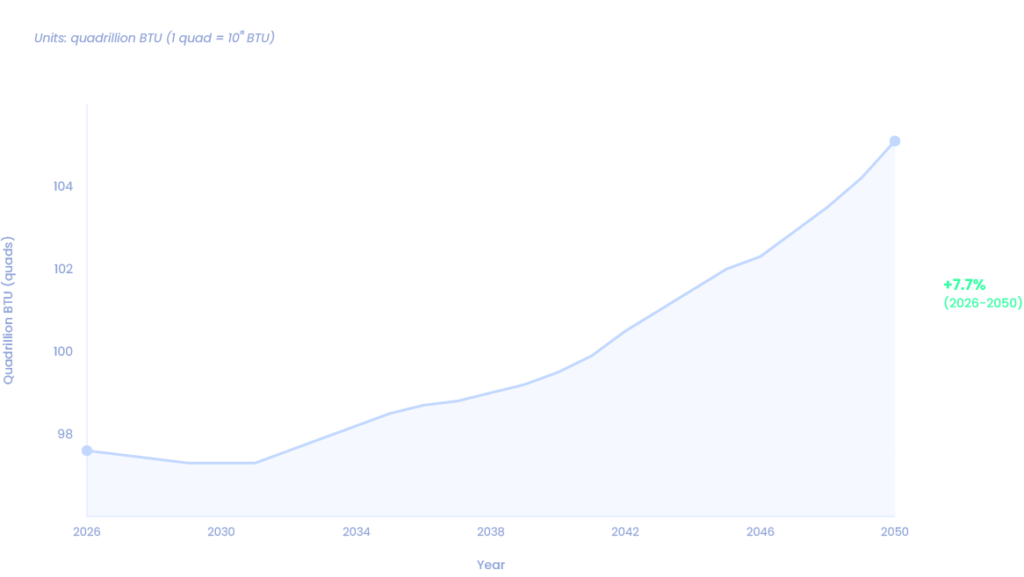
Figure 3: US Energy Consumption, 2026-2050
So, as a shipper, how do you get started shipping freight by train and/or by barge?
Lucky for you, we know a guy.
References
[1] Smil, Vaclav. General Energetics: Energy in the Biosphere and Civilization. New York: John Wiley & Sons Inc., 1991.
[2a] Zhu, X. G., Long, S. P., & Ort, D. R. (2008). What is the maximum efficiency with which photosynthesis can convert solar energy into biomass?. Current opinion in biotechnology, 19(2), 153-159.
[2b] U.S. DOE / NRDC
[2c] U.S. DOE Coal Fact Sheet (Apr. 2024)
[3] A Modal Comparison of Domestic Freight Transportation Effects on The General Public: 2001-2019. University of Arkansas Maritime Transportation Research and Education Center
[4] US Department of Energy/Energy Information Administration Annual Energy Outlook Projection
About the Author

David Correll is the Director of Freight Market Intelligence at Telegraph. He has spent two decades in transportation and logistics with the US Department of Transportation, the US Department of Energy, the Massachusetts Institute of Technology, and Clark University. David brings his many experiences – and a little bit of wit – to help us break down some of the more nuanced challenges and opportunities facing American rail transportation.